Sigma FTC Connect
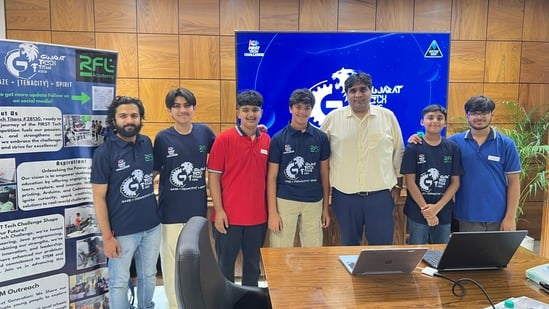
As a rookie team, we had the chance to collaborate with our sister FTC team, SIGMA (#20890)—an opportunity that quickly became one of the most defining experiences of our season. With years of experience across multiple FTC seasons, SIGMA brought not just technical knowledge but a clear sense of what it takes to be a well-rounded, competitive team. We invited them to Ahmedabad for an in-person collaborative session, where they guided us through every major aspect of the FIRST Tech Challenge and helped accelerate our growth in a matter of days.
We kicked off the session with a deep dive into our robot design and mechanical systems. SIGMA closely reviewed our chassis, mechanisms, and overall architecture, advising us on subsystem reliability, weight optimisation, and key design trade-offs. They stressed the importance of an iterative engineering process—prototyping, testing, failure analysis, and refinement—which helped us move away from guesswork and toward a structured, principle-driven approach to robot development.
From there, we transitioned into programming and control systems. SIGMA mentored us on writing clean, modular, and scalable code, walking us through how to structure TeleOp and Autonomous OpModes effectively. They introduced us to best practices for using encoders and the IMU, implementing PID-based motion control, and approaching debugging systematically. These lessons directly translated into more reliable code and a noticeable improvement in our on-field consistency.
One of the most exciting parts of the collaboration was learning advanced vision processing with the Limelight 3A. SIGMA guided us through everything from camera mounting and wiring to dashboard configuration, helping us reduce latency and improve detection reliability. They showed us how to design and tune vision pipelines, pull data through NetworkTables, and convert vision feedback into real-time robot actions. By integrating Limelight data with PID control, encoder feedback, and IMU inputs, we were able to significantly improve our autonomous alignment accuracy and build more resilient autonomous routines with smart fallback logic.
Beyond the robot itself, SIGMA helped shape the way we think about game strategy and match readiness. They walked us through the game manual in detail, helping us connect robot capabilities with realistic scoring paths and alliance-based strategies. This shifted our perspective: FTC stopped being just a technical challenge and started to feel like a high-level strategic sport that thrives on collaboration.
Our relationship with SIGMA didn’t end after that single visit. Throughout the season, we received continued mentorship from their team captain and Junior Dean’s List Award winner, Saisha. She gave us a behind-the-scenes view of the FTC award ecosystem—breaking down award intent, judging criteria, and evaluation rubrics in a way that made everything feel much more approachable. Saisha showed us how to align our outreach, documentation, leadership, and technical work with what judges value, without losing authenticity or focusing on impact just for the sake of awards. Her mentorship helped us tell our story more clearly, quantify the impact of our outreach, and speak confidently about our journey during judging sessions.
On the documentation side, SIGMA reviewed our Engineering Portfolio strategy and helped us structure the content around specific award criteria. They encouraged us to clearly document design iterations, showcase individual and collective leadership, and maintain strong consistency across our portfolio, engineering notebook, and presentations.
They also invested time in helping us with outreach, branding, and long-term team sustainability. SIGMA shared proven outreach models, methods to track impact metrics, strategies for communicating with sponsors, and ideas for planning beyond a single season so that the team can continue to grow year after year.
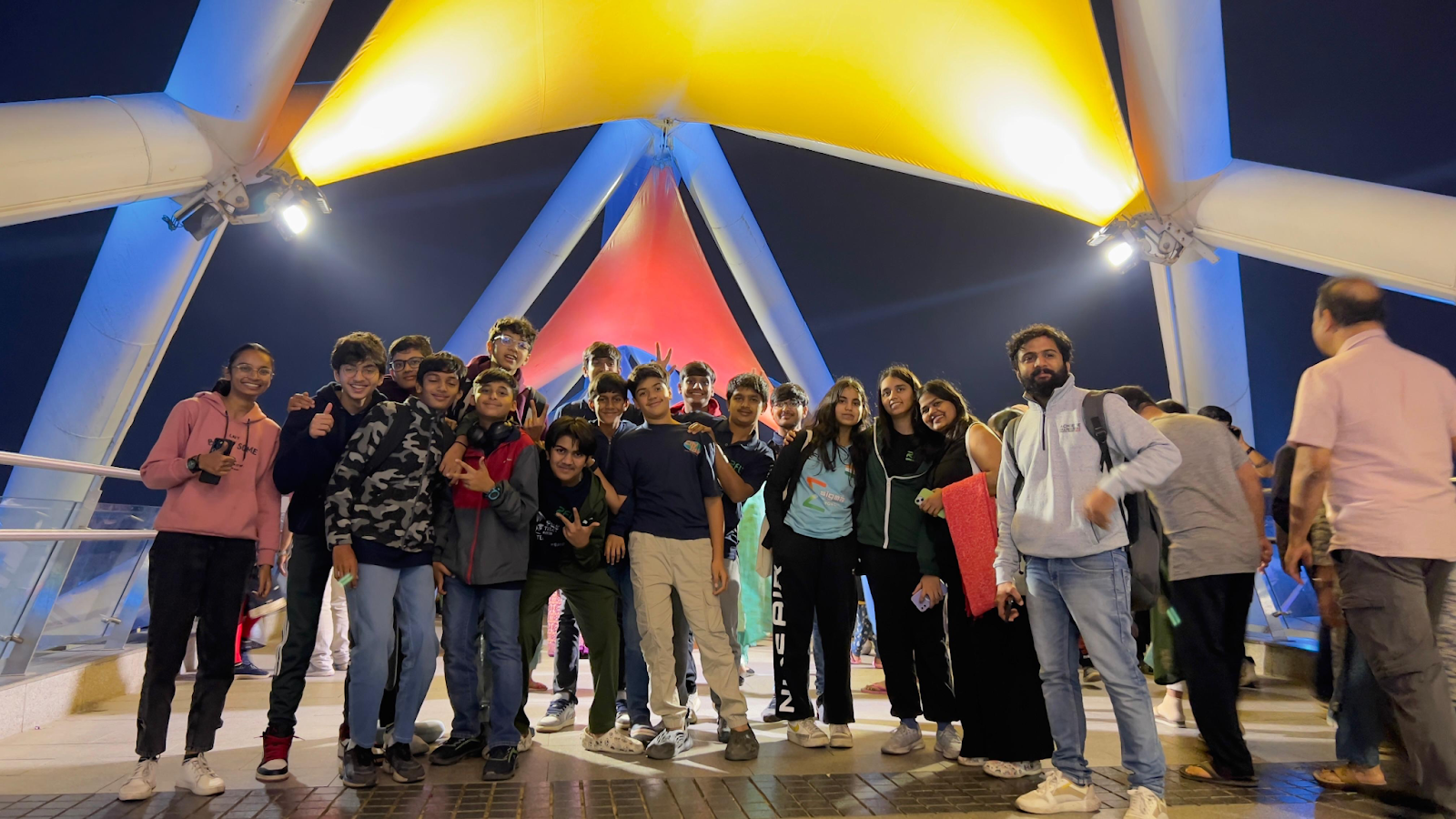
Of course, the collaboration wasn’t all work. After the intensive technical sessions, we explored the cultural heritage of Ahmedabad together. These moments off the field helped us connect on a personal level and reinforced the core values of FIRST—collaboration, respect, and Gracious Professionalism.
Looking back, our partnership with SIGMA (#20890) has been a cornerstone of our rookie season. Their mentorship across mechanical design, programming, vision systems, game strategy, awards, outreach, and documentation has given us a strong foundation to build on as we continue evolving into a competitive and well-rounded FTC team.